Writing a thoughtful message to a stranger used to take real effort. Now it takes a prompt. AI can research a prospect and draft a tailored email in seconds, and every company has the same tools. Inboxes are fuller than ever, and buyers trust less of what lands in them.
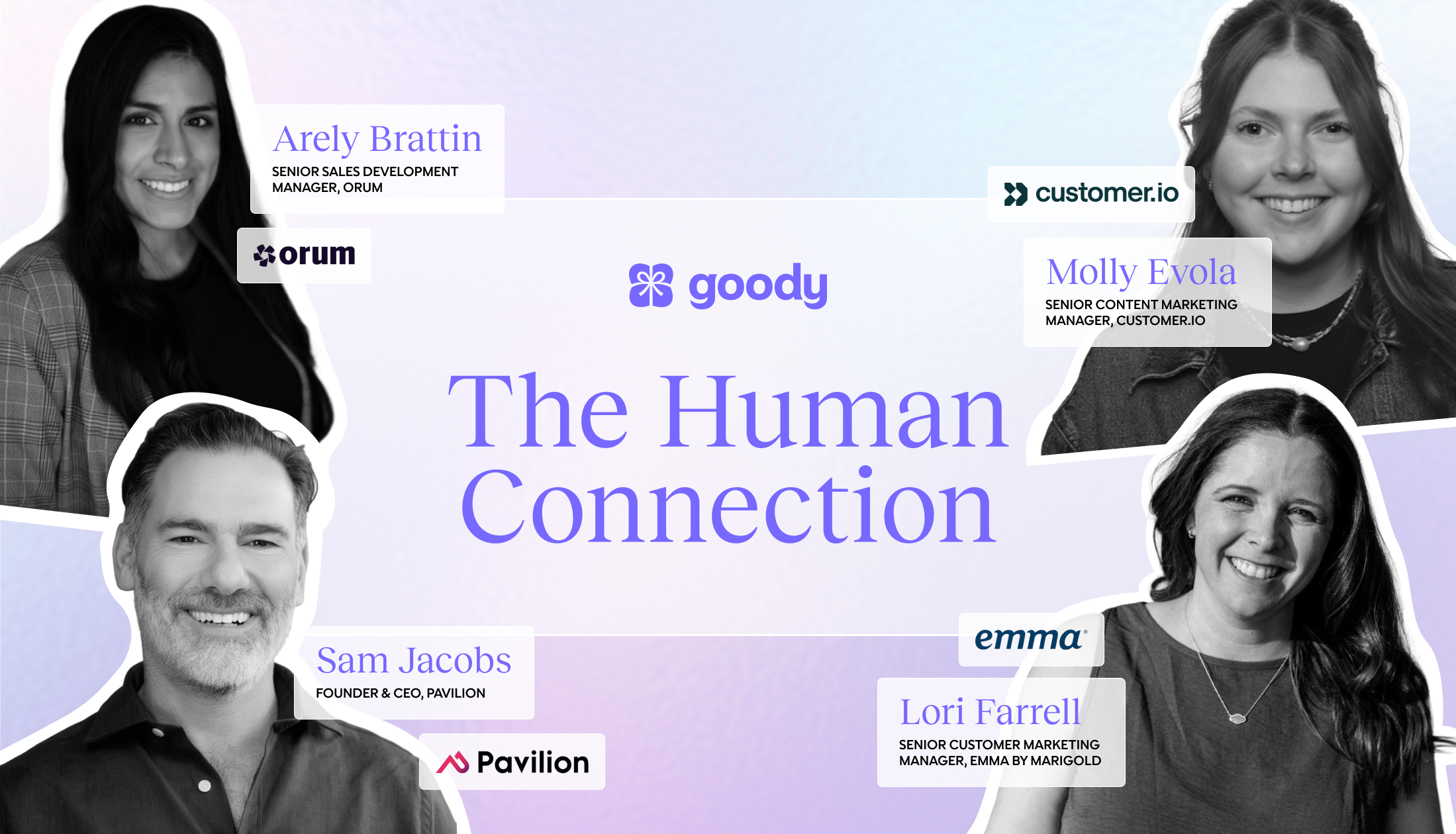
So what gets you attention now? We asked four go-to-market (GTM) leaders who send outreach for a living and get buried in it, too:
- Sam Jacobs, Founder & CEO of Pavilion, a membership community for go-to-market leaders
- Lori Farrell, Senior Customer Marketing Manager at Emma by Marigold, an email marketing platform
- Arely Brattin, Senior Sales Development Manager at Orum, an AI-powered live conversation platform for sales teams
- Molly Evola, Senior Content Marketing Manager at Customer.io, a customer engagement platform for email, push, SMS, and in-app messaging
These contributors didn’t talk to each other or compare notes, but we noticed they kept coming back to the same idea. We’re calling it the human signal: evidence that someone understood the recipient and made a thoughtful choice. Their interviews are below, followed by a framework and a checklist your team can use before the next campaign goes out.
Answers have been condensed and edited for clarity.
Sam Jacobs, Founder & CEO, Pavilion
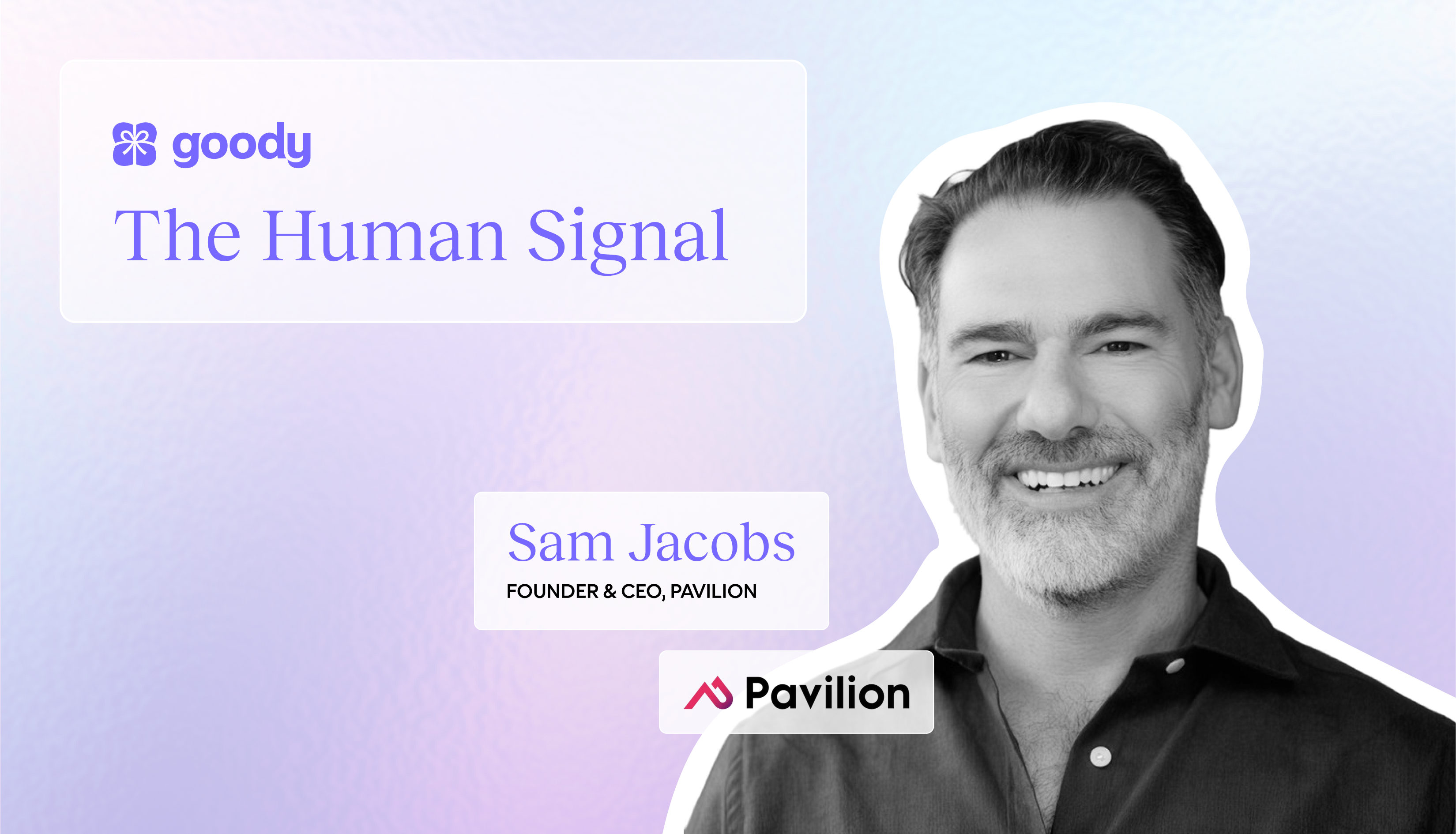
Sam founded Pavilion, a membership community where go-to-market executives learn from one another in small, curated groups. He’s built a business on trusted peer relationships.
What has become noticeably less effective in B2B marketing or sales over the past year?
I think we’re witnessing the beginning of the end of undifferentiated outbound. The marginal cost of producing content, writing emails and generating outreach is approaching zero, which means the volume of all of those things is going to explode. But the amount of attention available to consume all that content isn’t increasing. There are still only 24 hours in a day.
You can’t solve an attention problem with more volume. The companies that win will be the ones that have earned the right to someone’s attention before they ask for it, through reputation, relationships, community or simply having something interesting to say.
What’s a common misconception people have about personalization?
Most people confuse personalization with inserting personal information into a generic message. Just because you know where I went to college or that I recently posted something on LinkedIn doesn’t mean you understand anything about me.
Real personalization requires empathy. It requires understanding what someone is trying to accomplish, what they’re worried about, and why whatever you’re offering might matter to them at this particular moment. And if everyone can use AI to produce an incredibly personalized message in seconds, personalization itself stops being a differentiator. At some point, people are going to be able to smell the difference between someone who wants a relationship and someone who just used a better prompt.
What makes you pay attention to outreach from someone you don’t know?
A credible introduction from someone I trust is probably the single most effective way to get my attention. Beyond that, I respond to people who have demonstrated they’ve thought about my business in a way I haven’t: an interesting observation about our business model, a specific problem they’ve identified, or an idea I haven’t considered.
I also appreciate brevity. If you have something interesting to say, say it. And humor works. Someone who can make me laugh is already ahead of the competition.
How does your team use automation while keeping outreach relevant and personal?
We’re still figuring this out, and I’d be suspicious of any CEO who claims to have completely solved it. Automation is particularly valuable for identifying signals and eliminating administrative work. Someone gets promoted. A member attends an event. Someone in our community introduces us to a prospective member. Technology should help us identify and respond to those moments.
What I’m much less interested in is using automation to manufacture the appearance of a human relationship. The aspiration is to use technology to make the humans in our business dramatically more effective at being human.
What's an effective tactic that you use in a non-scalable way?
Getting people around a dinner table. I know that sounds almost embarrassingly simple given all the technological innovation we’re discussing, but I think that’s the point.
We regularly bring together small groups of senior executives for private dinners. There’s no sales presentation and no elaborate agenda. We put interesting people in a room, create the conditions for a great conversation, and then get out of the way. A remarkable amount of business gets done as a byproduct of people simply enjoying each other’s company. You can’t automate friendship. Someone still has to show up for dinner.
What does Pavilion’s vantage point tell you about what buyers want that a lot of GTM teams get wrong?
Buyers are much less interested in your product than you think they are. They’re interested in their own problems, their careers and the things they’re trying to accomplish. They’re worried about their jobs and how they’re perceived internally, and more and more, about how AI might change their companies. The best sellers understand that whole human context.
Buyers also talk to each other. A lot. They ask people they trust which vendors are good and which executives have figured something out. Your reputation in those conversations is probably worth more than your next thousand outbound emails.
Lori Farrell, Senior Customer Marketing Manager, Emma by Marigold
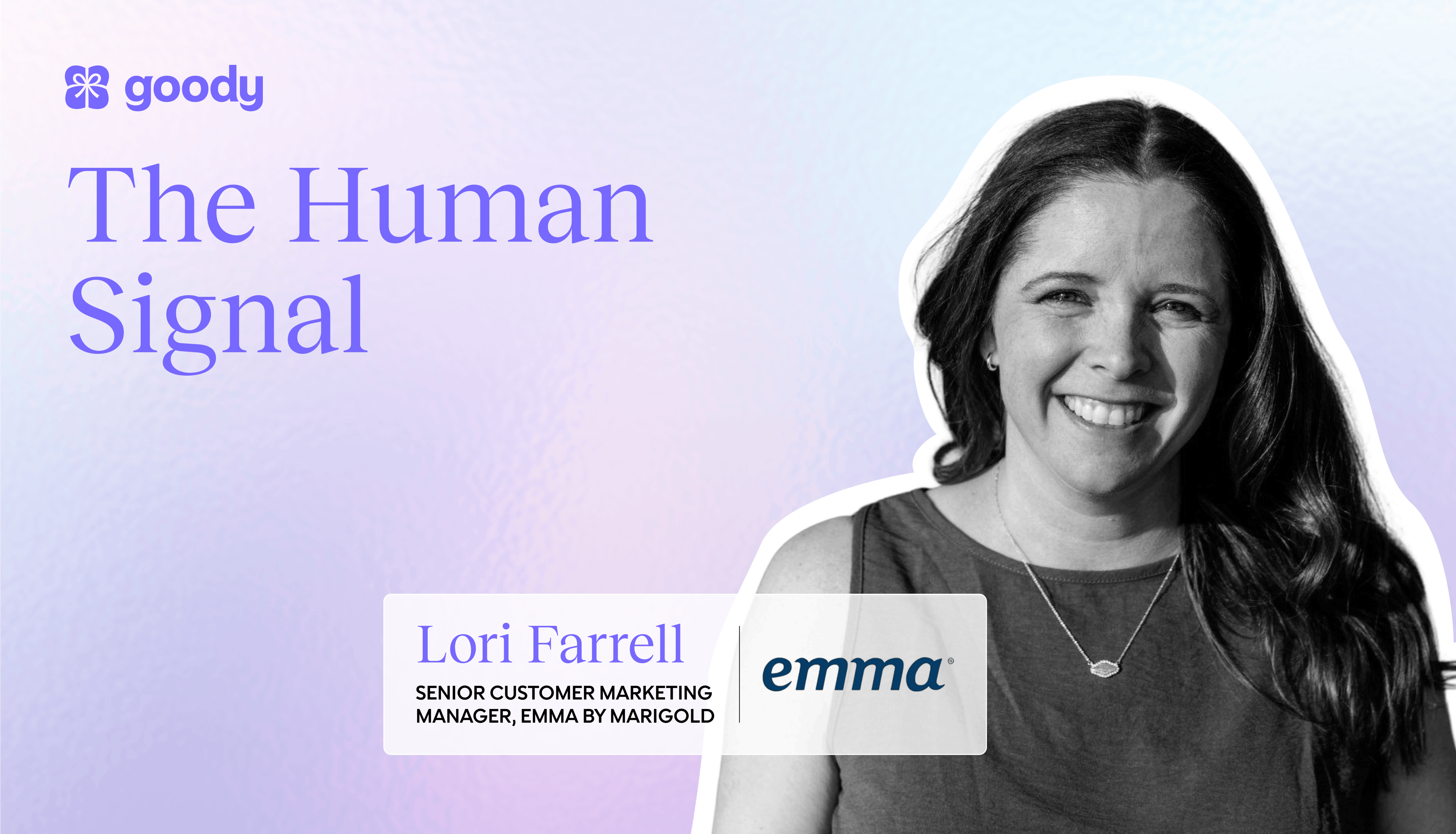
Lori runs customer marketing and advocacy at Emma by Marigold, an email marketing platform. Her job is turning happy customers into vocal ones.
What has become noticeably less effective in B2B marketing or sales over the past year?
With AI, it’s become a lot harder for buyers to trust what companies say about themselves, so brand-created content just doesn’t land like it used to. Customer proof has become way more important, especially video testimonials, case studies and real reviews, because they come from real people.
What makes you pay attention to outreach from someone you don’t know?
These days, it’s a lot easier to tell when you’re receiving automated, AI-written outreach. I received an email the other day that said, “This is out of the blue, but…” It was the third cold email I’d received from them. Not so out of the blue.
When it’s obvious the person did their research and took the time to be personal, I’m more likely to respond, even if it’s with a “no thank you,” because I know they put time and effort into it. They’re just doing their job and deserve a reply.
How does your team use automation while keeping outreach relevant and personal?
The biggest example is our welcome series. Customers get a welcome email early on where I introduce myself as the one behind the scenes of the marketing communications. I also set expectations for what they’ll receive from me, so they know it’s not a sales email but something useful for their job. Three months in, they receive an invitation to join our advocacy program.
What's an effective tactic that you use in a non-scalable way?
After our webinars, I personally follow up with customers who were engaged in the chat, whether they asked a question, shared an idea or just joined the conversation. Each message is one-on-one, so it doesn’t scale perfectly, but it works. Customers feel heard, it keeps the conversation going after the event, and it’s often how I find new case study participants, speakers or advocates.
What turns a happy customer into one who’s willing to advocate for you?
Feeling heard. I used to work in customer success, and even when a customer was frustrated about a bug or a missing feature, they stayed happy as long as they felt heard, supported and helped to find value in other ways. From there, it’s about asking them and making it easy, whether that’s a review, a case study or a quick testimonial.
How do you use gifting in your advocacy program without it feeling transactional?
Opted In, our customer advocacy program, is built on UserEvidence with gift fulfillment through Goody. Members complete missions like reviews and case studies and earn points toward rewards they choose themselves, including donating to a cause they care about. There’s a community alongside the missions, so you could join, never complete one and still get something out of it. The gift is how I say thank you, not the reason someone showed up. I’m thanking someone for their time, not paying for a review.
Arely Brattin, Senior Sales Development Manager, Orum
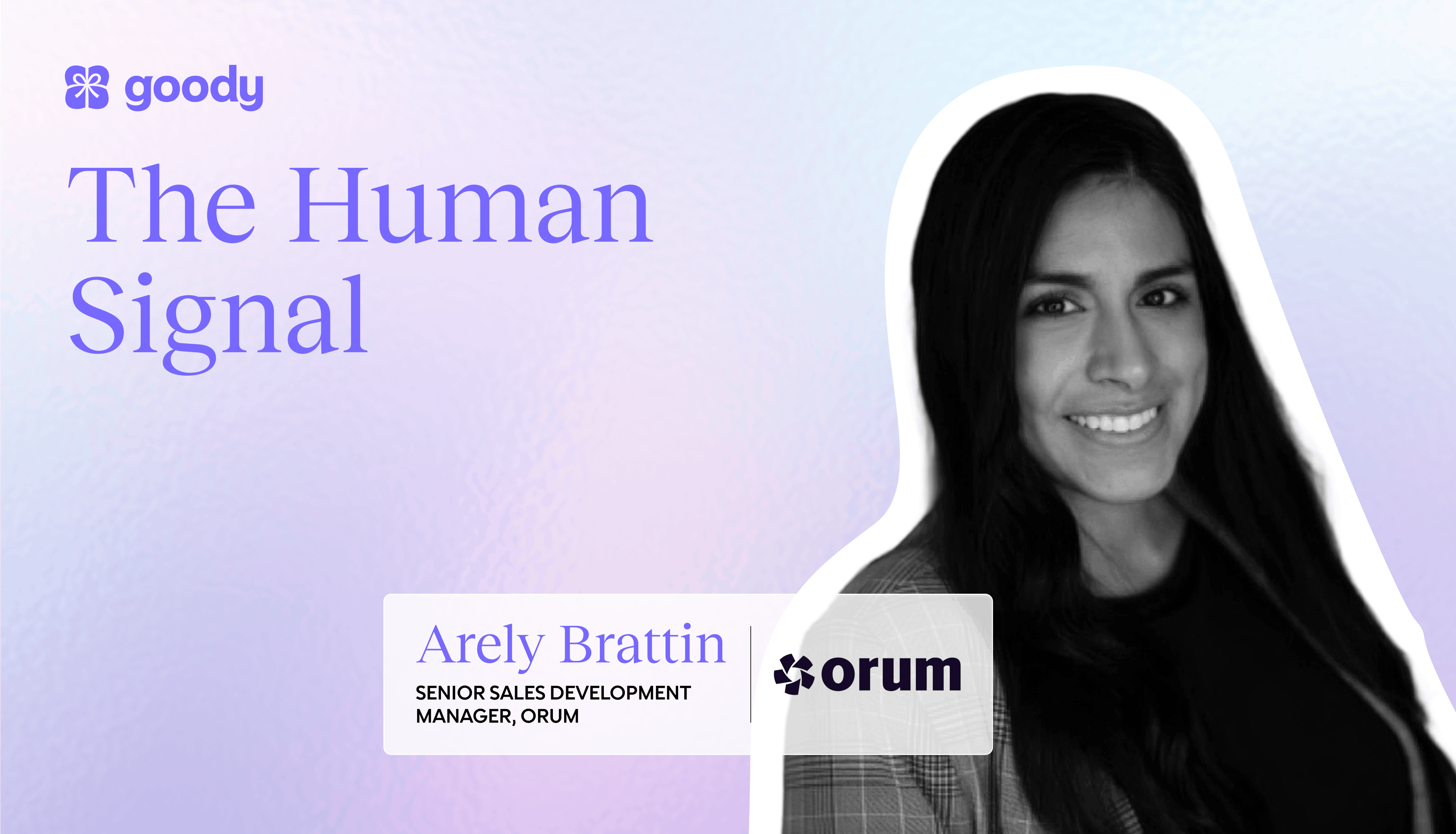
Arely is a Senior Sales Development Manager at Orum, an AI-powered live conversation platform for sales teams. She sees outbound from both sides of the inbox.
What’s a common misconception people have about personalization?
They use AI to try to figure everything out, then have AI write the content. Keeping a human in the loop is important, and a personalized email doesn’t have to be perfect to get the point across. AI-written content is almost too perfect. You can tell when things weren’t written for you.
What makes you pay attention to outreach from someone you don’t know?
The first two sentences in an email, or a permission-based opener. Leading with context and why they’re reaching out, rather than a vague email or cold call hoping something lands.
How does your team use automation while keeping outreach relevant and personal?
We use AI agents to pull relevant context from previous conversations and what this person may care about based on their LinkedIn, and then we personally craft the email. Pulling together the signals, conversations and “why now” automates the workflow while giving the rep autonomy over the actual message.
What's an effective tactic that you use in a non-scalable way?
Gifting. We use it very strategically at events, or before and after calls, to send something tailored to the prospect. It’s landed well, especially when you find them a perfect gift.
When does a gift help move a deal forward, and when does it fall flat?
In the middle of any deal, it shows that you care about how the opportunity is going. It falls flat as a Hail Mary when you’re trying to save a deal.
What’s the best follow-up you’ve seen after an event, and what made it work?
We just attended Gong Celebrate and pulled the conversation and note fields from our lead tracker into the outreach sequence, so reps could use context from those conversations in the email copy. It landed very well, and we even received an email praising the post-event outreach. Way better than any generic “thanks for stopping by” email.
What should GTM teams start or stop doing in 2027?
Start investing in events. We’ve seen great success from them. Start investing in professional development, too: attend webinars and conferences, and network with folks. Stop sending AI slop. We’re all tired of it and can read it from a mile away. And stop using AI SDRs. They don’t work. Have a real person pick up the phone.
Molly Evola, Senior Content Marketing Manager, Customer.io
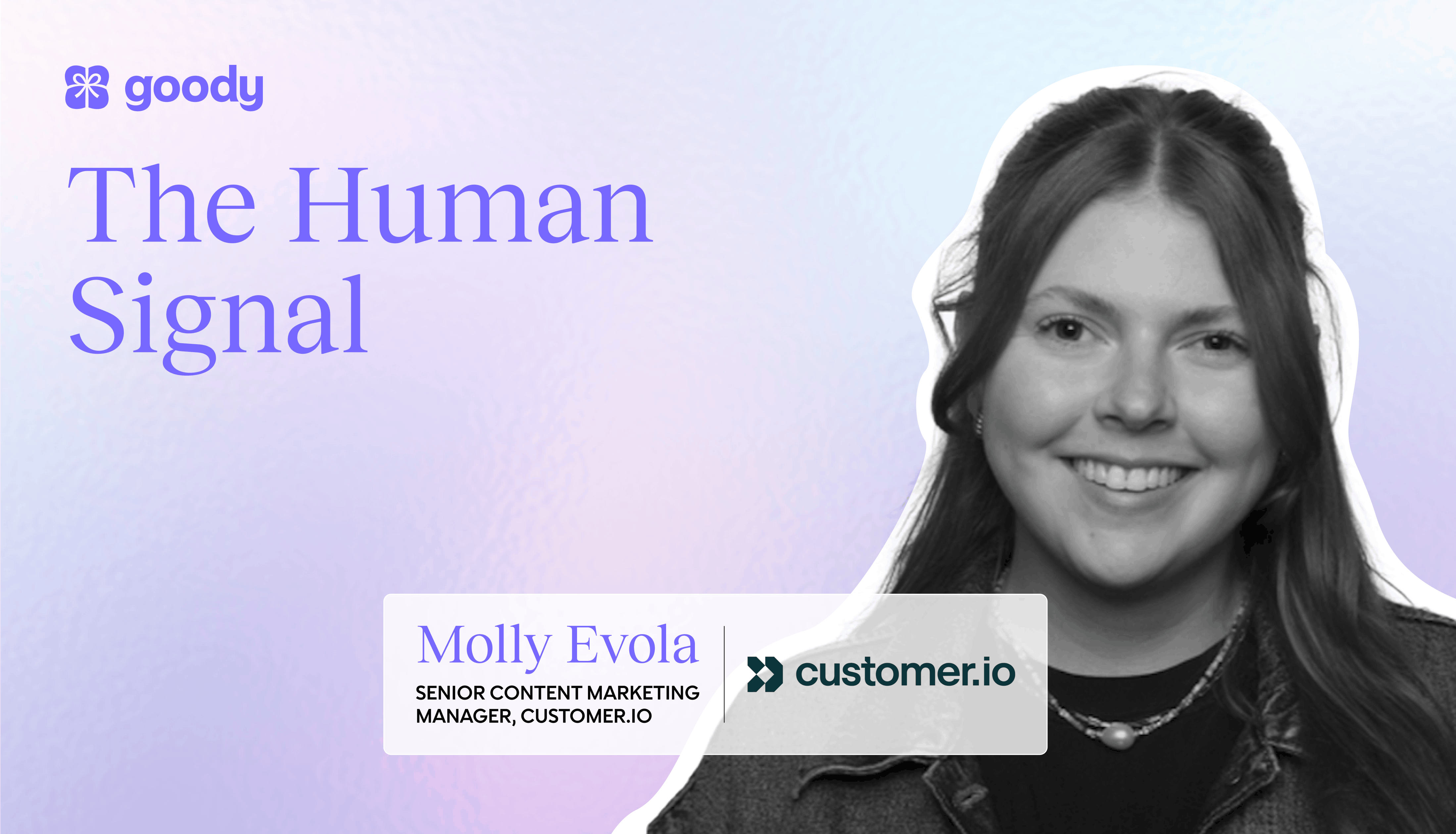
Molly is a Senior Content Marketing Manager at Customer.io, a customer engagement platform where automation is built into the product.
What has become noticeably less effective in B2B marketing or sales over the past year?
Unsurprisingly, generic marketing. A social post with no point of view, an email that could’ve gone to anyone, a gift with zero thought behind it. All of it flops the same way. We’re drowning in input right now, at work and at home, so if what you’re sending doesn’t feel intentional, people scroll right past it. The bar is: did you actually think about the person on the other end before you hit send?
What’s a common misconception people have about personalization?
Slotting in a first name or company name and calling it personalized. On the flip side, you also don’t need to know someone’s favorite coffee shop from stalking their Instagram. That’s its own kind of creepy. Real personalization comes from an actual relationship, and it should match where someone is in their journey with you. The more you’ve earned that relationship, the more personal you get to be.
What makes you pay attention to outreach from someone you don’t know?
A different format almost always gets me to pause, like a video or voice note in my LinkedIn DMs instead of another wall of text. Whether I engage depends on what’s attached to it, but it earns a second look. Beyond that, it’s someone who clearly gets where I am in my role and speaks to that. A real point of view goes a long way.
How does your team use automation while keeping outreach relevant and personal?
We’re a customer engagement platform, so automation is the whole game for us. But every automated message we send has a reason, a segment and a moment behind it. If we’re promoting a webinar on AI and customer engagement, we only send it to people who’ve shown us they care about that topic, and we reference that history. Timing matters, too. The majority of our campaigns trigger off real actions, like someone downloading something or showing up to an event, instead of waiting for the next scheduled send.
Customer.io uses both automated gifting programs and personal gifts from sales reps. How do you decide which approach fits a particular moment?
It comes down to where the relationship is. Automated gifting is typically for people who are pre-sales, before there’s been a demo or a call. We still keep it relevant, tied to a trigger or a segment, but it’s not one-to-one personalization. Once a rep has talked to someone or we know them well, that’s when a gift can get more personal.
What should GTM teams start or stop doing in 2027?
Start prioritizing retention as much as acquisition. We spend so much energy and budget getting people in the door, but some orgs drop the ball once an account converts. We’ve given our account management team the same kind of relevant, well-timed gifting programs our sales team has used to open doors. A renewal, a milestone, a genuine thank-you for the relationship. It doesn’t have to be complicated to matter.
How do you give your outreach a human signal?
Before any touchpoint goes out, check it against these five questions. The more it passes, the stronger the signal.
Relevant. Does this connect to something the recipient cares about right now? Think about what they’re trying to accomplish and what they’re worried about, not where they went to college.
Specific. Could this have been sent to 100 other people unchanged? If so, it’s probably a generic template.
Effortful. Is there visible evidence that a person made a thoughtful choice? Lori replies to outreach that shows real research, even when the answer is no.
Generous. Does the recipient get something valuable before you ask for anything? An idea, an introduction, a useful resource and a thank-you all count.
Well-timed. Is there a reason this needs to happen right now? A promotion, a renewal, a question in a webinar chat or a conversation at an event all qualify. “The sequence said so” doesn’t.
High-signal touchpoints
Every channel can send a strong signal or a weak one. Here’s what the difference looks like, inspired by the interviews above.
- Low signal: A template with a first name and company name dropped in.
- High signal: A follow-up that references a specific conversation you had at an event.
Social and DMs
- Low signal: Another wall of text in a LinkedIn DM.
- High signal: A short video or voice note that speaks to where the recipient is in their role.
Content
- Low signal: Claims about your product, in your own words.
- High signal: Customer proof like video testimonials, case studies and reviews from real people.
Events
- Low signal: A generic “thanks for stopping by” email to everyone who scanned a badge.
- High signal: A small dinner with no sales pitch, or a one-on-one note to the people who spoke up in the webinar chat.
Introductions
- Low signal: Name-dropping a mutual connection who never agreed to vouch for you.
- High signal: A warm introduction from someone the recipient trusts.
Direct mail
- Low signal: A mass-printed mailer that could have gone to anyone on the list.
- High signal: A note that references something specific to the recipient, sent at a moment that matters to them.
Community
- Low signal: Treating your community as another list to promote to.
- High signal: A space where people get value even if they never buy, like Emma’s advocacy community, which members can join without completing a single mission.
Gifting
- Low signal: A gift sent as a Hail Mary to save a stalled deal.
- High signal: A gift tied to a moment, like a mid-deal check-in, a renewal or a thank-you for someone’s time.
Team checklist
Run through these questions with your team before your next campaign launches:
- Who exactly is this for, and why would they care this week?
- What triggered this send: a real action or moment, or just following the calendar?
- Could this message have gone to 100 other people unchanged?
- Do the first two sentences make clear why we’re reaching out?
- Did a person write or heavily edit every one-to-one message?
- What does the recipient get before we ask for anything?
- If someone engages, who follows up personally?
- Are we measuring replies, meetings and retention, or only how much we sent?
Where thoughtful gifting fits
Goody is a gifting platform, so we’ll admit our bias. Still, gifting is one high-effort touchpoint among many, and it follows the same rules as everything else in this guide. A gift can create a human signal, but it’s not only about the object. What the recipient notices more is the relevance, timing, and thought behind it. A modest gift tied to something they care about can say a lot more than an expensive one picked off a list.
Our contributors were specific about when gifts work:
- In the middle of a deal, as a sign you’re invested in how it’s going
- As a thank-you, separate from any ask, like the rewards Lori’s advocacy members choose for themselves
- After the deal closes, at renewals and milestones, when some teams stop showing up
- Matched to the relationship, with automated sends kept relevant to a trigger or segment, and more personal gifts saved for people you know
Where gifts fall flat: as a last-ditch effort to rescue a deal that’s slipping.
The bottom line
Again and again, our contributors came back to the same idea: buyers can tell when someone did the work. AI makes the research faster, but the judgment still has to come from a person. Use automation to find the right moment, then show up for it yourself.
When a gift is the right touchpoint, Goody makes it easy to send one that shows you were paying attention. More than 25,000 companies use Goody to send gifts in minutes, no address needed. Sign up free and get a $20 credit toward your first gift, or book a call with our team to figure out where gifting fits in your outreach.
About the author